+447300463745

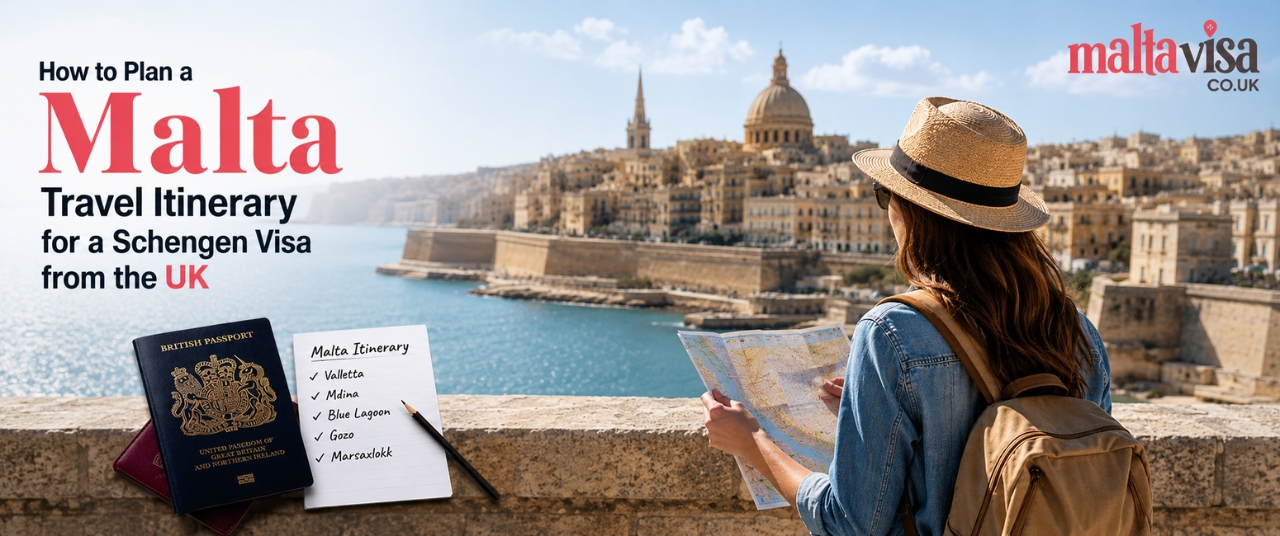
Planning a trip to Malta from the UK is an exciting adventure, but it requires careful preparation, especially if you need a Schengen visa. Malta, a beautiful Mediterranean archipelago, offers rich history, stunning landscapes, and vibrant culture, making it a top travel destination. However, when applying for a Schengen visa, a well-thought-out travel itinerary is essential to enhance your application’s success. This blog post will guide you through how to plan your Malta travel itinerary effectively while considering the requirements for your Schengen visa application from the UK.
Important: British citizens usually do not need a visa for short tourist visits to Malta of up to 90 days in any 180-day period. This guide is mainly for non-EU and non-Schengen nationals living in the UK who need a Malta Schengen visa before travelling. GOV.UK confirms that British travellers can visit Malta and other Schengen countries visa-free for up to 90 days in any 180-day period for tourism, family visits, business meetings, cultural or sports events, and short-term study or training.
You may need a Malta Schengen visa from the UK if you are a non-EU or non-Schengen passport holder living in the UK and your nationality requires a visa to enter the Schengen area.
This may apply to UK residents holding passports from countries such as India, Pakistan, Nigeria, China, South Africa, Bangladesh, the Philippines, Sri Lanka, and other visa-required countries.
You should check your nationality, UK residence status, and travel purpose before applying. If Malta is your only destination, your main destination, or the Schengen country where you will spend the longest time, you should usually apply through Malta.
The European Commission states that Schengen visa applicants should apply at the consulate of the country they intend to visit. If visiting more than one Schengen country, they should apply where they will spend the longest time. If the stays are equal, they should apply through the country they will enter first.
A Malta travel itinerary shows the visa officer that your trip is planned, realistic, and temporary. It helps connect your travel dates with your hotel booking, flight reservation, travel insurance, and financial documents.
A strong itinerary should clearly show:
Your itinerary does not need to be overcomplicated, but it should be consistent with the rest of your visa documents.
The Schengen visa application requires you to present a detailed travel itinerary as proof of your visit’s purpose and duration. An itinerary helps consulate officers assess your travel plans, ensuring you have a clear schedule and booked accommodations, which reduces visa risk concerns. A Malta visit as part of your Schengen visa also demonstrates that you have genuine plans to enter and leave the Schengen area within the visa validity. Therefore, your Malta travel itinerary should be as detailed and realistic as possible.
First, determine how many days you will spend in Malta. Ideally, your itinerary should reflect the length of your visa stay, typically up to 90 days for short stays. Whether your trip is a quick 3-day getaway or a two-week exploration, clearly defining your duration will help you plan your daily activities and accommodation accordingly.
A well-rounded itinerary includes major tourist attractions and unique local experiences. Malta offers diverse attractions from historical sites to natural wonders:
If you want to learn more about Malta’s unique features while planning your trip, check out 7 Mind Blowing Facts About Malta That You Should Know for inspiration.
Once you have your list of must-see places, allocate time for each destination in your itinerary. Ideally, provide approximate times, transport modes, and any reservations like guided tours or entry tickets. This level of detail shows your genuine intent and preparation.
Your visa application requires proof of accommodation. Book hotels, hostels, or Airbnb stays before submitting your visa form. Make sure your accommodation is within reasonable distance from your planned activities to appear realistic.
Include details of your transportation: flights from the UK to Malta, return flights, and local transit (buses, ferries, taxis). Malta is well-connected by its international airport and public transport, making travel within the islands easy. Attaching these booking confirmations with your itinerary strengthens your application.
Schengen visa requirements mandate travel insurance covering medical emergencies with a minimum of €30,000 coverage. While this is not part of your itinerary, you should mention in your travel plan that you have arranged insurance for the trip.
Here’s a simple sample to help you draft your own itinerary:
This schedule covers travel, accommodation, and activities, presenting a clear, concise outline that visa officers expect.
After preparing your itinerary, the next important step is securing your visa. If you’re applying from the UK, you can grab your VFS Malta visa in the UK quickly by using efficient and trusted visa services that streamline the process.
I am applying for a short-stay Malta Schengen visa for tourism from [travel date] to [travel date]. During my stay, I will be accommodated at [hotel name and address]. My planned itinerary includes Valletta, Mdina, Rabat, Gozo, Comino, Blue Lagoon, and Marsaxlokk. I have attached my travel itinerary, flight reservation, hotel booking, travel insurance, proof of funds, employment documents, and UK residence evidence. I will return to the UK on [return date] as shown in my return flight reservation.
Avoid these mistakes when preparing your Malta visa travel itinerary:
A good itinerary should look realistic, consistent, and easy to understand.
The EU Entry/Exit System, known as EES, is being implemented across the Schengen area. Travellers may be required to register biometric details, such as fingerprints and a photo, when entering the Schengen area for short stays. GOV.UK says EES registration does not require action before arrival, but checks may take longer at busy times.
If you are travelling to Malta, allow extra time at the airport and follow instructions from border officers or your travel operator.
Planning a Malta travel itinerary is not only crucial for crafting an unforgettable trip but also a vital part of your Schengen visa application from the UK. A detailed, realistic, and well-organized itinerary supported by bookings and documents helps demonstrate your genuine intentions and improves your chances of visa approval. By following this guide, you can confidently prepare everything, enjoy the stunning Mediterranean beauty of Malta, and immerse yourself in its unique culture and history. Don’t forget to explore special events and local nuances, such as the festive Christmas Eve celebrations in Malta, to enrich your travel experience.
British citizens usually do not need a visa for Malta for short visits of up to 90 days in any 180-day period for tourism, family visits, business meetings, cultural or sports events, or short-term study. However, non-EU nationals living in the UK may need a Schengen visa depending on their nationality and residence status.
You should apply for a Malta Schengen visa if you legally live in the UK, hold a visa-required passport, and Malta is your only destination, main destination, or the country where you will spend the longest time.
A Schengen visa is generally valid for travel within the Schengen area, unless the visa sticker has territorial restrictions. However, you should apply through Malta only if Malta is your main destination or your first entry country when stays are equal.
Many applicants use flight reservations instead of fully paid tickets. You should check the latest visa centre and consulate guidance before paying for non-refundable travel.
Your cover letter should include your travel purpose, travel dates, accommodation, itinerary summary, funding details, attached documents, and reason for returning to the UK.