+447300463745


Planning a trip to Malta from the United Kingdom? Malta is a stunning Mediterranean island nation known for its crystal-clear waters, rich history, vibrant culture, and sunny climate that attracts UK travellers throughout the year. Whether you’re dreaming of relaxing beach days, exploring historic cities, enjoying cultural festivals, or taking a peaceful island escape, the timing of your visit can completely shape your experience.
Malta is one of the most popular European holiday destinations for travellers from the UK thanks to its warm weather, beautiful coastline, and year-round appeal. However, each season offers something different — from lively summer beach crowds to quiet winter sightseeing and festive local celebrations.
This monthly guide explains the best time to visit Malta from the UK based on weather, crowd levels, prices, festivals, and activities, helping you choose the perfect time for your ideal Maltese holiday.
*We will confirm you through email when the appointment will be fixed.
For most UK travellers, spring and early autumn are the ideal times to visit Malta, offering warm temperatures, fewer tourists, and more affordable accommodation.
Winter in Malta is mild compared to the United Kingdom, making it a popular escape from the cold British weather. Temperatures typically range between 12°C and 16°C, with occasional rain but plenty of sunshine throughout the season.
Although the sea is too cool for swimming, this period is one of the best times to explore Malta’s historic attractions without crowds, making it ideal for relaxed sightseeing and cultural travel.
Cool but generally dry conditions dominate this period, with occasional rainfall but plenty of clear days suitable for outdoor activities.
February is especially lively due to Malta’s famous Carnival celebrations, particularly in Valletta and Gozo. Expect colourful parades, costumes, music, and traditional street performances.
If you are travelling from the UK, make sure to check visa requirements in advance. Planning your documents early can help ensure a smooth trip, especially for Schengen travel arrangements.
This period is perfect if you prefer a quieter, more relaxed holiday. Plus, traveling in winter often means lower accommodation costs and more availability. If planning your travel documents, you may find our guide on How to Plan a Malta Travel Itinerary for a Schengen Visa from the UK particularly useful.
Spring is arguably the best time to visit Malta for UK travelers who want pleasant weather without the summer crowds. Temperatures start rising from 17°C to 25°C, and the island blooms with colorful flowers and greenery.
This time of year is ideal for outdoor adventures such as hiking the coastal trails or trying water sports. It is also sufficiently early for the best accommodation deals before the peak summer season. For budgeting your trip, check out useful tips on Is Malta expensive? Cost of Living in Malta.
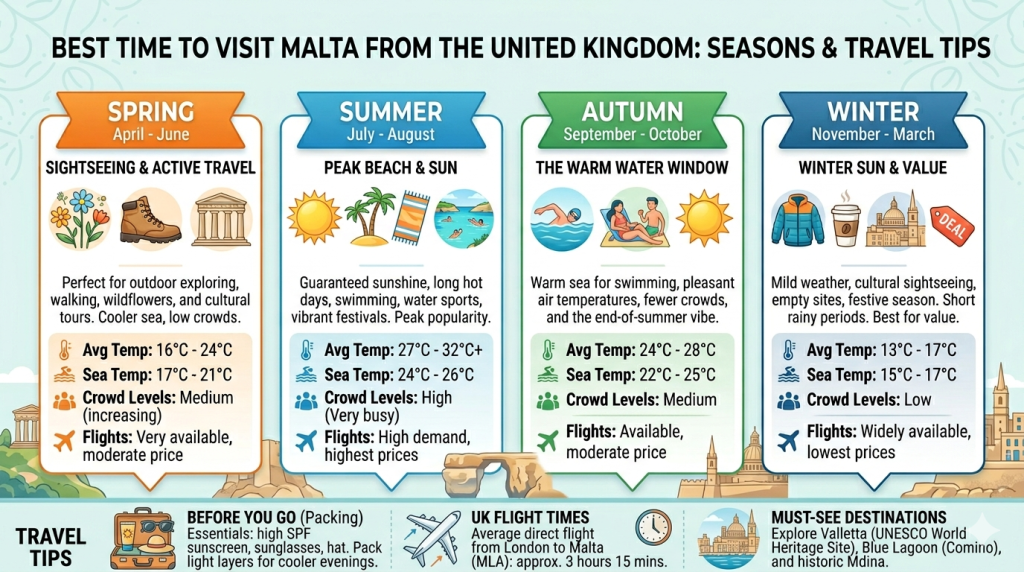
If you love hot weather, beach clubs, nightlife, and lively crowds, July and August are the peak summer months in Malta and the most popular time for UK travellers looking for a classic Mediterranean beach holiday.
During this period, temperatures regularly exceed 30°C, and Malta becomes one of Europe’s busiest and most vibrant island destinations.
One of the biggest highlights is the Isle of MTV Malta music festival, which attracts international artists and thousands of visitors every year, adding to the island’s energetic summer vibe.
Because this is peak tourist season, it is strongly recommended to book flights and accommodation well in advance to secure better prices and availability.
September and October are part of the shoulder season in Malta and are widely considered one of the best times for UK travellers who want warm weather without the peak summer crowds.
During this period, the intense summer heat begins to ease, but temperatures still remain very pleasant, usually ranging between 25°C and 28°C, with cooler evenings that make exploring more comfortable.
Expect long sunny days with mild evenings, making it ideal for both beach relaxation and sightseeing. The sea remains warm enough for swimming and water activities well into October.
This season also features several local feasts and cultural events across the islands. One highlight is Notte Bianca in Valletta, a popular night festival of art, music, and cultural performances that transforms the capital into an open-air celebration.
This period offers a perfect balance between summer warmth and reduced crowds, making it ideal for travellers who want both good weather and a more relaxed, authentic Maltese atmosphere.
Early autumn is one of the best times to visit Malta, offering the perfect balance between warm summer-like weather and a more relaxed, less crowded atmosphere.
During September and October, temperatures remain pleasantly warm, typically between 25°C and 28°C, and the sea stays warm enough for swimming and water activities well into October.
Expect long sunny days with mild evenings, making it ideal for both beach relaxation and exploring historic towns. Rainfall is minimal, and conditions remain suitable for outdoor travel.
One of the highlights of this period is Notte Bianca in Valletta, a major cultural festival that transforms the capital into a vibrant celebration of art, music, theatre, and live performances.
This season is ideal for travellers who want warm weather without the intensity of summer crowds, offering a more relaxed and authentic Maltese experience.
The best time to visit Malta from the United Kingdom depends on your priorities: If you want peace and cultural immersion without crowds, visit between January and March or November and December. For pleasant weather, blooming landscapes, and comfortable beach visits, April to June is perfect. For the quintessential summer holiday with beach parties and festivals, July and August are ideal but crowded and more expensive. September to October offers a great balance of warm weather, fewer tourists, and vibrant local culture.
Whichever month you choose, Malta welcomes you with its unique charm year-round. To ensure a smooth trip, don’t forget to review travel requirements and see our expert advice on planning a Malta itinerary for Schengen visa applications from the UK. Understanding the cost of living in Malta will also help you budget your visit better.
Start planning your Maltese adventure today with MALTA-VISA. There’s always something wonderful awaiting UK travellers on this Mediterranean gem.
*We will confirm you through email when the appointment will be fixed.